AI Pitch Deck Generator: How Zendeck Helps Startups Win Investors
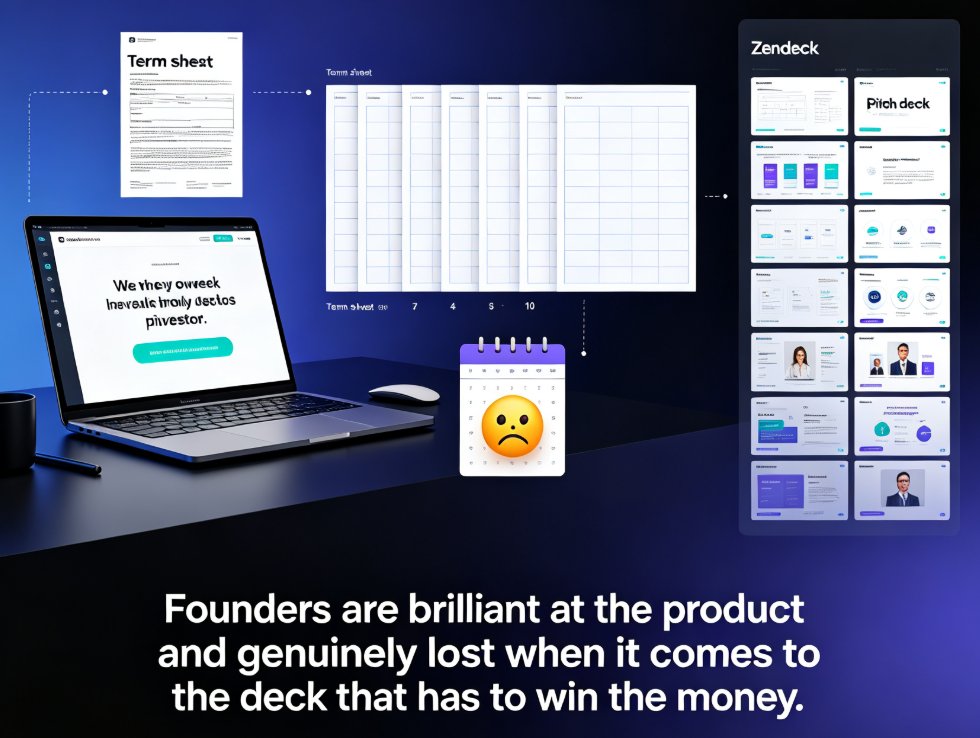
You've got a product people actually use, a term sheet within reach — and you're staring at a blank slide at midnight, wondering what an investor-grade "market size" slide is even supposed to look like. Let's be real: most founders don't fail at fundraising because their product is weak. They fail because the deck doesn't tell the story investors want to hear in the order they want to hear it.
The good news? The days of spending two weeks on a pitch deck are over. AI-powered pitch deck generators have turned what used to be a design bottleneck into a 60-second process, and Zendeck has quietly become one of the most practical options for founders who don't have a design team on call.
I. Why Manual Pitch Decks Are Killing Your Fundraising Timeline
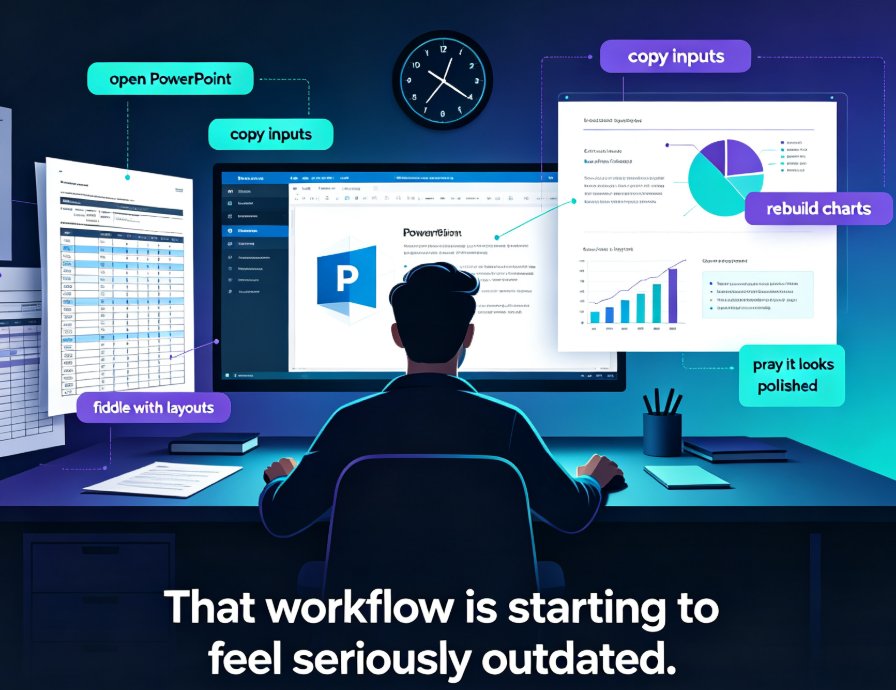
Here's the uncomfortable math. A polished investor deck typically takes a founder 3 to 5 days of focused work — longer if you're doing it alongside running the company. And most of that time isn't spent on substance. It's spent on:
- Shuffling content between 40 different template layouts
- Chasing font consistency across slides
- Rebuilding charts because the data changed
- Trying to compress a 20-slide draft into the 10-14 slides investors actually have patience for
The cost isn't just time — it's momentum. Weeks of delay in getting a pitch out the door can push your fundraising timeline past a market window, or worse, make you look less prepared than the three other startups competing for the same check.
AI pitch deck generators solve the bottleneck at its root: they take your raw input — an outline, a one-paragraph vision, or even just a prompt — and generate a complete deck structure with slide text, layouts, and design applied. As our guide to AI deck generation explains, the shift from manual assembly to automated generation isn't a convenience gain; it's a structural change in how decks get made.
II. The 10–14 Slide Framework Investors Actually Expect
Before tools matter, the structure does. Most investor decks follow a well-worn 12-slide framework: Title/Vision, Problem, Solution, Market Size, Product, Business Model, Traction, Go-to-Market, Competition, Team, Financials, and the Ask.
| Slide | Purpose | What VCs are checking |
|---|---|---|
| Title / Vision | Hook + one-sentence thesis | Can you say what you do in 10 words? |
| Problem | The pain you're solving | Is this a real, painful problem? |
| Solution | Your product, simply shown | Does the fix match the pain? |
| Market Size | TAM / SAM / SOM | Is the opportunity big enough? |
| Product | Features, demo, screenshots | Does it actually work? |
| Business Model | Pricing, unit economics | Can you make money? |
| Traction | Users, revenue, growth | Is there proof people want this? |
| Go-to-Market | Channels, sales motion | Do you know how to reach customers? |
| Competition | Landscape, moat | Why will you win? |
| Team | Backgrounds, expertise | Can this team execute? |
| Financials | Projections, burn | What will my ROI look like? |
| Ask | Amount + use of funds | What exactly do you need? |
The framework isn't a suggestion — it's the default expectation. When VCs flip through your deck, they're mentally checking off these boxes in order. Deviate too far and you'll lose them by slide five.
The structural challenge for most founders isn't understanding this framework — it's translating their messy, evolving business into the crisp narrative each slide demands. That's exactly the step AI handles well.
III. How Zendeck Turns Your Outline Into an Investor-Ready Deck
Here's the workflow that works, and it's absurdly simple:
Step 1: Dump your raw material in
You don't need to write a business plan. Paste a Word outline of your business, drop in a markdown file summarizing your product and traction, or type a short prompt describing your startup. Zendeck's AI parses the input, identifies the core entities — product, market, differentiators — and drafts the narrative arc for a 10-14 slide deck.
Step 2: Let the AI structure the story
The generator maps your content to the investor framework: problem → solution → market → model → traction → ask. It makes the structural decisions so you don't have to. The painful part — figuring out what the "ask" slide should say, and how to position traction relative to competition — gets a strong first draft instantly.
Step 3: Apply a template that matches your stage
This is where Zendeck differentiates itself from generic AI slide tools. Instead of offering a single "business deck" template, the template library includes purpose-built pitch decks for pre-seed, seed, Series A, demo day, and investor update decks. Each template applies not just colors and fonts, but slide structure tuned to what that audience expects.
Step 4: Refine, don't rebuild
AI gets you to 80% in minutes. The remaining 20% — sharpening a headline, swapping a chart, tightening the ask — is work you do directly in the editor. Smart layout keeps everything aligned as you edit, so you don't re-break the design while rewording a slide.
IV. Visual Consistency Without a Design Team
Here's a pitch-deck killer most founders don't see coming: inconsistent branding. Your deck looks fine slide-by-slide, but when a VC flips through, the fonts subtly change, colors drift, and it reads as amateur. The question every founder asks in their head — "Does this look professionally made?" — usually has an uncomfortable answer.
Zendeck solves this with two features working in concert: AI-driven design automation and the template system. When you generate a deck, every slide is locked to the same layout rules — font pairing, text hierarchy, color palette, spacing system. No drift, no orphan slides.
If you're fundraising under your company brand, this consistency is what separates "founder-made" from "fundable." Zendeck's smart layout engine re-aligns content as you edit, and its brand kit support lets you enforce your logo, colors, and font choices across every slide. Investors see a team that sweats details — and that impression carries into the trust conversation.
V. The Video Move: Pitching Remote Investors With PPT-to-Video
Here's a scenario that used to be impossible: a partner at a top firm is traveling and can't take a call. She asks for "something I can watch." Before, you'd send another PDF and she'd skim it. Now, you export your Zendeck deck to a narrated video.
Zendeck's PPT-to-Video capability turns your finished deck into a narrated micro-presentation in minutes. The AI generates a voiceover script from your slide content, adds subtitles, and produces a watchable deck walkthrough — no recording studio, no screen recording software.
For fundraising rounds where investors are geographically spread, a self-narrated deck video is a legit competitive edge. It's faster to consume, works across time zones, and makes your round feel like a conference, not a cold email attachment. This walkthrough shows exactly how to add narration to your pitch slides, and if you're producing a batch of investor materials — deck PDF, video, one-pager — the PPT-to-video workflow keeps everything on-brand in one pass.
VI. Common Pitch Deck Mistakes AI Can't Fix for You
Let's be honest about the limits, because every tool has them. An AI pitch deck generator creates structure, polish, and speed. It cannot invent traction you don't have, or make a muddled business model coherent. But there are three mistakes founders make after they have a well-built deck:
1. Over-stuffing slides
One idea per slide. If you're jamming three data points and two charts into one slide, no amount of design polish saves it. Leave white space; let the story breathe.
2. Making the "Ask" vague
Your final slide should say exactly how much you're raising, the instrument (SAFE, equity, note), and where the funds go. Ambiguity here costs you fundraising momentum.
3. Ignoring the audience
A demo day deck should sing differently than a Series A meeting deck. The best AI tools let you generate variations fast, so tailor the pitch to the room.
VII. The Deck That Wins: Your Move
Let's recap the pitch. To win investors, you need a deck that's structured like the framework they expect, designed with consistency that signals professionalism, and produced fast enough that you can iterate for every conversation. Zendeck covers all three: AI structure generation, purpose-built pitch templates, and the export options — PDF, PPTX, or narrated video — that fit how investors actually consume in 2026.
Your product is the hard part. The deck shouldn't be the bottleneck.
FAQ
Q: How many slides should an investor pitch deck have? A: The standard range is 10-14 slides. A typical structure covers Title/Vision, Problem, Solution, Market Size, Product, Business Model, Traction, Go-to-Market, Competition, Team, Financials, and the Ask. We recommend 12 core slides plus an appendix for backup detail.
Q: Can Zendeck generate a pitch deck from just a prompt? A: Yes. Zendeck accepts a short prompt, a written business outline, or a markdown/Word file, and generates a complete deck with narrative flow, slide layouts, and design applied — typically in under 60 seconds. You then refine the content in the editor before exporting.
Q: Does Zendeck offer templates for specific fundraising stages? A: Yes. The template library includes decks built for pre-seed/idea-stage, seed rounds, Series A, demo day / YC-style pitches, and investor update decks. Each template applies the slide structure and visual conventions that audience expects.
Q: Can I turn a Zendeck pitch deck into a video for remote investors? A: Yes. Zendeck's PPT-to-Video feature converts your finished deck into a narrated micro-presentation with subtitles, which works well for investors who can't attend live calls or are in different time zones.
Q: How is Zendeck different from using a generic AI presentation tool? A: Zendeck pairs AI content generation with purpose-built investor templates, consistent brand enforcement through smart layout, and PPT-to-video export — so your deck stays on-strategy and on-brand, from first draft to final deliverable.