Memory-Rich AI: The 2026 Trend Personalizing Courseware Like Never Before
Let's be honest: most AI-powered courseware today is still one-size-fits-all. You generate a deck, maybe it adapts slightly to the audience, but the next time that same learner comes back, the AI behaves as if it has never met them. That's about to change. In 2026, memory-rich AI is turning static, forgetful presentations into living learning profiles that grow with each session. Here's how this trend works—and why Zendeck is at the forefront of making it practical for educators, trainers, and corporate teams.
01 | Why Memory-Rich AI Is a Game-Changer for Courseware
Think about the last time you sat through a training module that repeated the same beginner tips you already knew. Frustrating, right? Traditional eLearning treats every learner as a blank slate. But human learning isn't like that—it builds on prior knowledge, revisits weak spots, and remembers what resonates.
Memory-rich AI changes this by persisting context across sessions. Instead of forgetting everything after the lesson ends, the AI keeps a continuous record of each learner's progress, preferences, and performance. According to a 2026 analysis by Cognee, this involves graph-based memory that links tickets, resolutions, and outcomes—what they call "memory as a first-class systems problem." When applied to courseware, this means the AI recalls that you already aced the basics, struggled with a specific concept, and prefer short video examples over long text. It then adapts the next deck accordingly.
For educators, this isn't just a nice feature—it's the difference between generic training and learning that actually sticks. In our experience working with trainers, the biggest pain point is re-engaging learners who feel they've seen it all before. Memory-rich AI solves that by making every interaction feel fresh and tailored.
02 | How Session Persistence Changes the Learning Experience
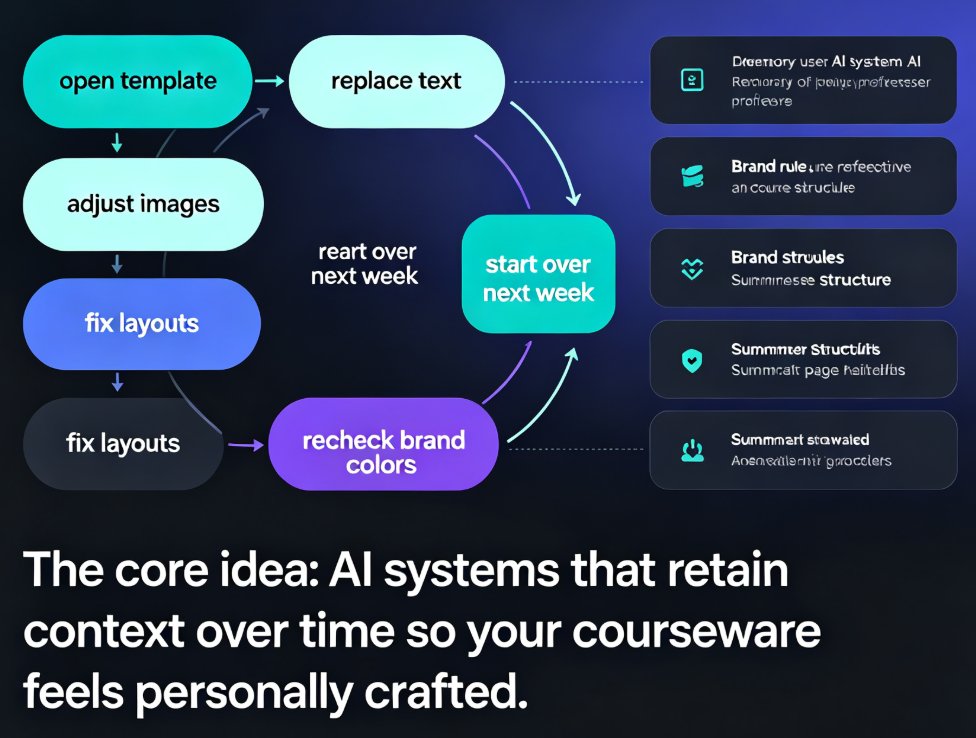
The core idea behind memory persistence is simple: your AI should remember you. Native LLM features like ChatGPT memory or Claude Projects can store lightweight preferences, but they lack the control and scalability needed for serious courseware. Dedicated memory layers, as Cognee explains, offer graph-structured reasoning, multi-tenancy, and enterprise data integration—exactly what an educational platform needs to track hundreds of learners across multiple courses.
Here's how that plays out in practice:
- Learner Preferences: The AI remembers that you prefer dark mode, work best with bullet points, or need subtitles on all videos.
- Progress Tracking: It knows you completed Module 3 on Tuesday and struggled with the quiz on pricing models, so it reviews that before moving on.
- Adaptive Pacing: If you breeze through a topic, the AI accelerates; if you linger on a slide, it offers extra examples.
The outcome? Higher completion rates, better retention, and learners who actually feel seen. A 2026 report from Course Creek highlights "personalized learning is becoming the new standard, with AI adapting course content, pacing, and recommendations." That's not hype—that's the shift we're seeing across industries.
| Feature | Static Courseware | Memory-Rich AI Courseware |
|---|---|---|
| Session context | Forgets everything | Retains and applies history |
| Adaptivity | None or basic branching | Real-time based on learner profile |
| Personalization | Segmented by role only | Individual, preference-based |
| Updating | Manual rebuild | AI adjusts content on the fly |
| Learner engagement | Drops after first contact | Grows with each session |
03 | Real-World Applications: From Customer Support to Personalized Learning
The applications go far beyond traditional training. Cognee highlights four areas where memory persistence is already transforming AI agents. Let's map them to courseware:
- Customer Support with Historical Context — Imagine a course generator that remembers the exact objections a sales team encountered last quarter and builds new objection-handling modules based on that history.
- Expert Knowledge Distillation — For technical training, the AI can store common SQL patterns or workflow structures from past sessions, and surface similar expert solutions when a new learner faces the same challenge.
- Personalized Learning Agents — This is the sweet spot. The AI tracks each student's preferences and progress over time, just as a human tutor would. It knows what level the learner is at and adjusts difficulty instantly.
- Agentic Research Assistants — For advanced learners, the AI can connect concepts across sessions, enabling multi-hop queries like "show me the theory behind the case study we discussed in Module 2."
These aren't futuristic fantasies—they're being built right now. For course creators, the takeaway is clear: start designing your content with memory in mind. That means structuring your courseware so it can be dynamically reassembled based on a learner's path.
04 | Building Memory-Rich Courseware with Zendeck
Here's where things get practical. You don't need to be a data scientist to adopt memory-rich AI. Platforms like Zendeck are already building the infrastructure to support adaptive presentation workflows. 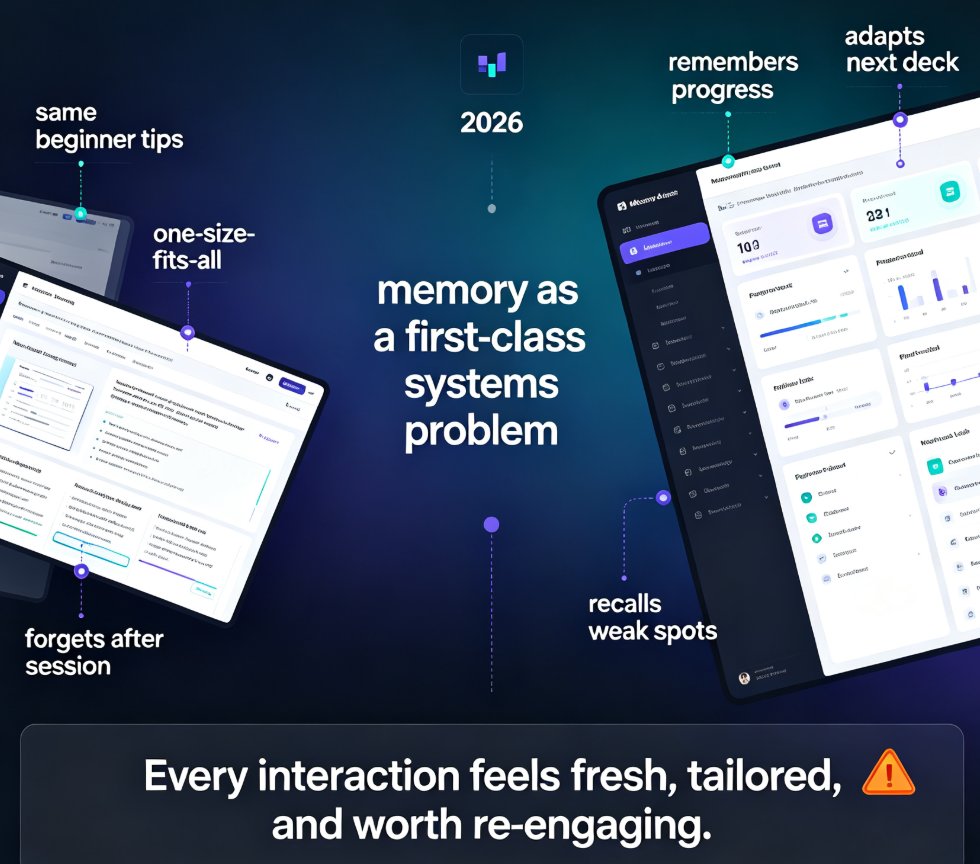
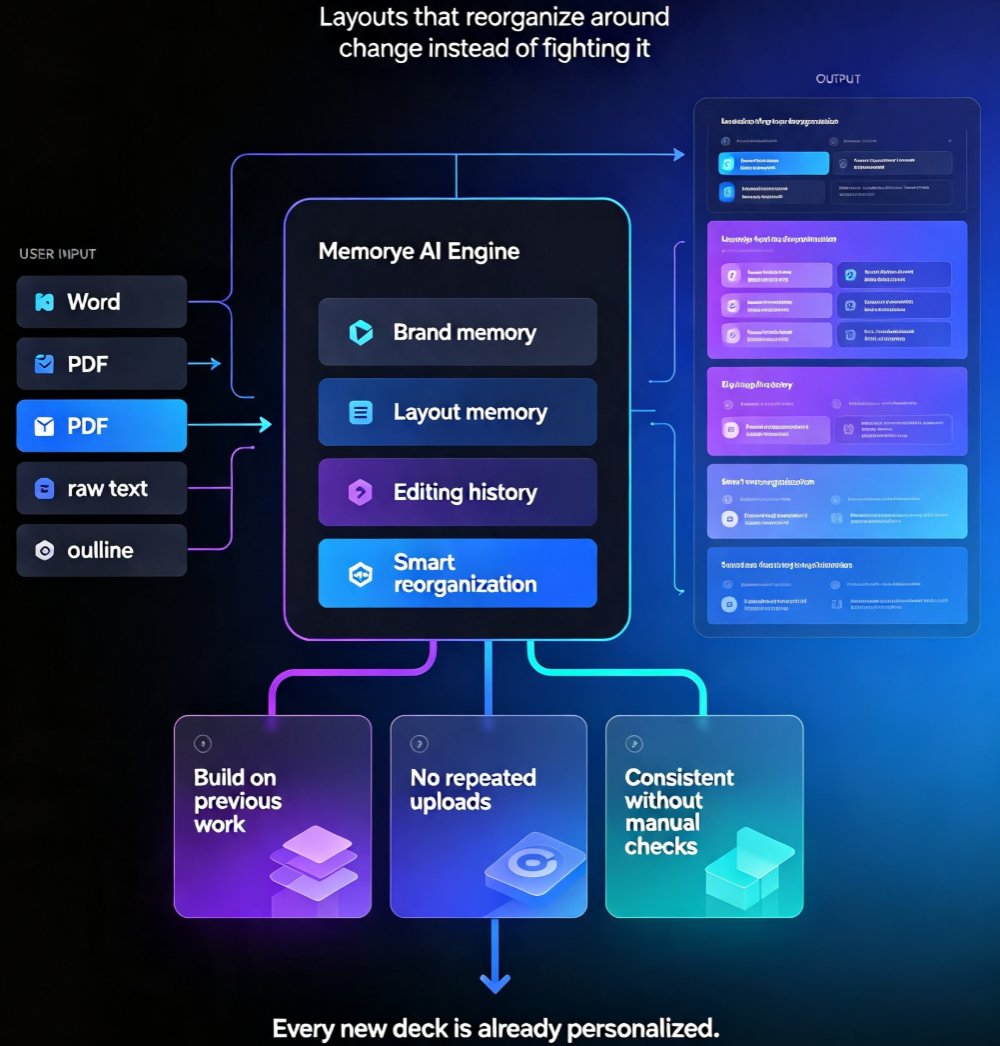
Zendeck's AI presentation tools go beyond static generation. By leveraging smart layouts, asset libraries, and the ability to convert decks to video, you can create courseware that feels alive. When you combine that with learner analytics—which many LMS platforms already collect—you can feed that data back into your Zendeck projects to adjust content on the fly.
A practical workflow: start with a base deck, collect learner feedback, then use Zendeck to regenerate the deck with new examples, simpler visuals, or deeper dives based on real performance. This is what we call memory-rich courseware in action. It's not magic; it's a workflow that combines AI's ability to generate consistent, branded, context-aware slides with the intelligence to update them based on learner behavior.
For managing a large library of personalized decks, you might also want to check out our guide on AI presentation templates for trainers. And if you're wondering how AI agents can automate this entire loop from outline to published micro-course, this piece walks you through it.
05 | The Road Ahead: Memory-Rich AI in 2026 and Beyond
We're only scratching the surface. The 2026 course development landscape, as outlined in Course Creek's research, is accelerating toward AI-managed authoring, automated multimedia production, and continuous course updates. Memory-rich AI is the connective tissue that makes these features truly personalized.
The most significant shift we're seeing is from design-focused AI to strategy-focused AI. Instead of just making slides look good, AI will decide what content matters for each learner, based on a lifetime of data. This aligns perfectly with Zendeck's philosophy: empower anyone without design skills to create professional, adaptive learning experiences.
But let's not ignore the elephant in the room: data privacy. With memory comes responsibility. As this trend grows, expect stricter compliance standards and more focus on secure private deployment options. Zendeck already takes this seriously, ensuring that your learning data stays safe while still enabling that rich, contextual experience.
In 2026, the question isn't whether you'll use AI for courseware—it's whether your AI will remember you. Memory-rich AI is the differentiator that turns a one-time deck into an ongoing learning relationship. With Zendeck, you can be ahead of that curve, creating courseware that feels human, learns with your audience, and keeps them coming back for more.
FAQ
What is memory-rich AI in the context of courseware?
Memory-rich AI refers to systems that retain and use information about learners across multiple sessions—such as their preferences, progress, and past interactions—to tailor content dynamically. Unlike static courseware, memory-rich AI adapts the presentation, pacing, and recommendations based on a persistent learning profile.
How does memory persistence personalize learning experiences?
Memory persistence allows the AI to remember what a learner has already mastered, struggled with, or shown interest in. For example, it can skip known topics, revisit weak areas, and adjust examples to match the learner's industry or role. This leads to a more efficient and engaging learning path.
Can Zendeck leverage memory-rich AI for courseware creation?
Yes. Zendeck's AI presentation platform is designed to support adaptive workflows. By integrating with learner data and using smart layouts and content generation, Zendeck helps create courseware that can be updated and personalized based on ongoing feedback—making it a practical tool for memory-rich learning ecosystems.
What are the easiest ways to start using memory-rich AI for my courses?
Start by using platforms that support session persistence and adaptive content, like Zendeck for presentation creation. Combine that with learner analytics to track progress over time. You can also use AI agents to generate differentiated learning paths and assessments, as highlighted in 2026 trends.