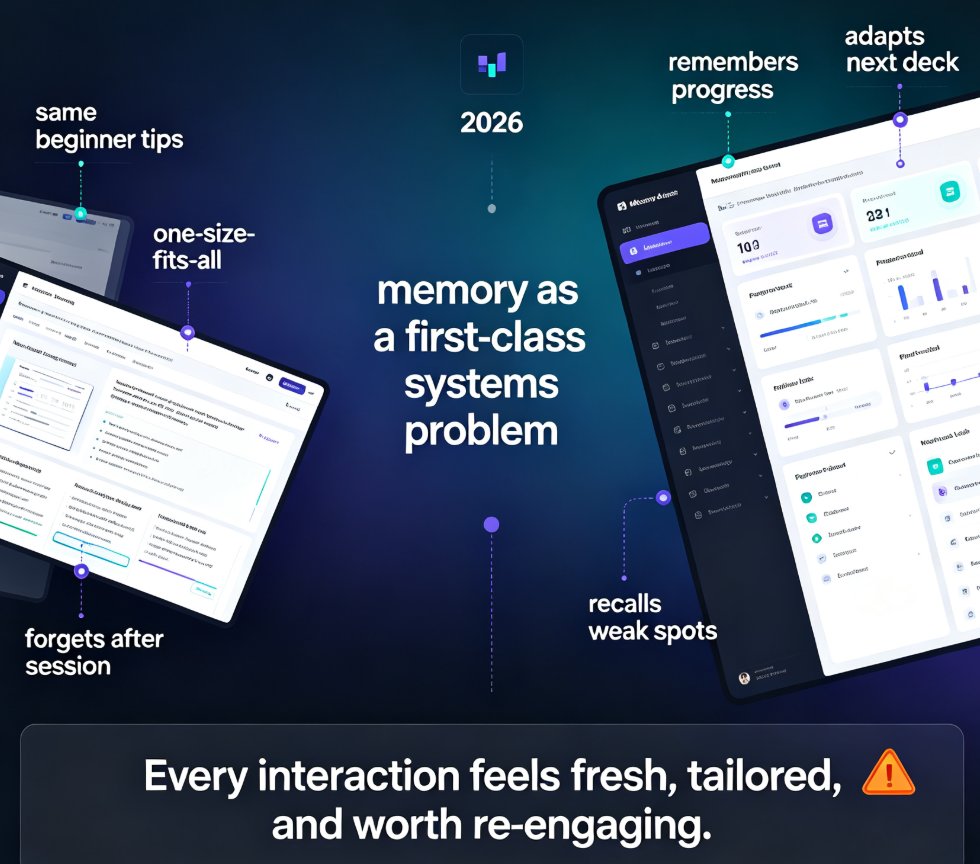
2026 AI Deck Trends: Memory-Rich Personalization Reshapes Slides
Let's be real: if you've sat through one more generic pitch deck with the same stock photos and bullet-point walls, you already know why personalization is the new battleground. In 2026, memory-rich AI isn't a buzzword—it's the standard. And it's about to change how you build and present every slide.
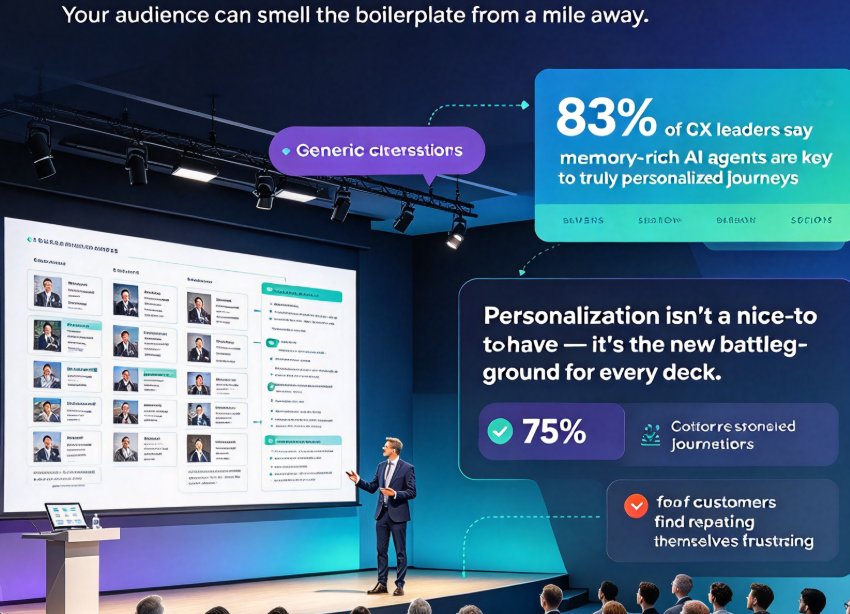
A quick reality check from recent research: Zendesk's 2026 CX report found that 83% of CX leaders say memory-rich AI agents are the key to truly personalized customer journeys, and 74% of customers find it frustrating to repeat themselves (time2accelerate.com/blog/2026-cx-trends). If that's true for customer support, it's even more true for internal presentations and sales decks.
Your audience doesn't want to see a boilerplate corporate deck; they want content that remembers their industry, their pain points, and the conversation you had last quarter. So let's talk about what that means for your next deck.
01 The Pain Point: Generic Templates Are Costing You Trust
We've all been there—you drag slides into a template, swap out the logos, and call it a day. But your audience can smell the generic from a mile away.
- They feel ignored: When your deck doesn't reference their specific metrics or previous conversations, they mentally check out.
- You waste hours: Customizing every slide manually is a time sink, and the result still feels fragmented.
- The brand gap: Different teammates pull different templates, so your company's message gets diluted deck after deck.
The real problem is that most AI presentation tools generate "nice-looking" layouts without understanding context. They pick a color scheme and move on, but they don't know whether you're presenting to a C-suite or a field sales team.
02 The Shift: What Memory-Rich AI Actually Changes
The 2026 CX trends are unambiguous: personalization is no longer a tactic, it's a structural expectation. For presentations, that translates into three capabilities your tool must have.
Memory-Rich Context
Your AI deck tool should remember the last deck you made for this client, the tone you used, and the data points that landed well. Zendesk's research shows that 65% of customers expect companies to adapt to their changing needs and preferences (Insider One, March 2026). When your AI tool builds on your outline history, it creates decks that feel like a continuation, not a cold start.
Adaptation Over Time
Personalization isn't a one-time snapshot. As your audience's needs shift, your slides should adapt. The same CX trend data shows that 74% of customers get frustrated when they have to repeat information across channels. In a presentation context, that means not asking your internal team to re-explain the same project status—your deck should automatically incorporate last week's numbers.
The Human Fallback
Even as AI gets smarter, human oversight still wins. Per the 2026 CX report, CSAT for AI-handled interactions is highest in structured contexts like password reset (4.41/5) and refund status (4.32), but drops for sentiment-heavy tasks like complaint handling (3.34). That's a lesson for decks: let AI handle structure and layout, keep the emotional intelligence in your narrative.
03 What This Means for Your Next Presentation Workflow
So how do you go from a Word outline to a deck that actually resonates? It's not magic—it's a smarter workflow.
Start With Context, Not a Blank Template
Instead of picking a generic template, start with an outline that includes your audience, their recent decisions, and the specific outcome you want. This is where Zendeck shines—it ingests your outline and applies layout intelligence automatically, so you're not fighting a template that doesn't fit your content.
Let AI Handle the Heavy Lifting
The smartest teams treat AI as a design co-pilot, not a one-click robot. Upload a markdown or Word file, and Zendeck's AI will generate a structured deck with consistent fonts, colors, and spacing. You get the "memory" of good design principles without having to memorize them.
Customize for Each Audience, Fast
Here's where the CX data hits home. If 83% of leaders agree that memory-rich AI is essential for personalization, you should be using a tool that remembers your brand kit. Zendeck's custom brand kit feature ensures every deck you produce—for sales, HR, or education—sticks to the same visual identity without manual tweaks. Check out how to set it up in minutes.
04 The Data Behind the Trend: Why Personalization Wins
Let's look at the numbers, because this isn't just a vibe. The research is consistent across sources:
Key stats from 2026 CX research: - 83% of CX leaders: memory-rich AI is key to personalized journeys (Zendesk) - 74% of customers: frustrated by repeating themselves (Zendesk) - 65% of customers: expect brands to adapt to changing needs (Insider One) - 4.41/5 CSAT for AI-handled password resets vs. 3.34/5 for complaint handling (Zendesk via OneReach)
Data compiled from Zendesk 2026 CX Trends and Insider One's engagement statistics.
What does that spell for decks? Structure and visual consistency get you 80% of the way there; context pushes you to 100%. If an AI tool can handle the predictable parts (layout, color, font, iconography), you free up mental energy for the parts that need a human touch: the story, the reassurance, the adaptation to your audience's mood.
05 Putting It Into Practice: Zendeck's 2026-Ready Features
You don't need a degree in design thinking to implement these insights. You need the right toolkit, and you need to use it intentionally.
Start With an AI-Powered Deck Generator
If you're starting from scratch, Zendeck's template library is designed around context, not just aesthetics. The AI picks from contextual templates that match your content type—pitch deck, training module, or internal update. This is the kind of smart layout that cuts design time by 50% or more, which we break down in detail in our smart layout guide.
Build Once, Reuse Everywhere
A presentation isn't a one-off product. With Zendeck's asset library, your icons, charts, and illustrations live in one place. When you update a deck next quarter, your AI tool pulls from the same library, so the visual language stays consistent. We dug into how AI asset libraries enforce brand consistency if you want the deeper story.
Convert Static Slides Into Personalized Micro-Courses
Here's a 2026 move: turn that deck into a narrated video and let the AI add subtitles automatically. This isn't just for e-learning teams—HR and sales enablement use it to make training content feel personal at scale. Our guide on auto-subtitles walks through the exact workflow.
06 The Bottom Line
The best presenters in 2026 aren't the ones with the flashiest templates. They're the ones who use memory-rich AI to remove friction from their process and focus on what their audience actually cares about.
The takeaway is simple: embrace tools that remember, adapt, and keep you consistent — then spend your saved time on the human layers of persuasion.
If you're still dragging your content out of a stale template, you're leaving trust on the table. Start with your outline, layer in a bit of brand context, and let Zendeck handle the structure. Your audience will notice the difference before you even finish the first slide.
FAQ
What does memory-rich AI mean for presentation creation?
Memory-rich AI systems retain context from prior interactions—like your past decks, brand kit, and audience preferences—and apply them to new content. For presentations, it means the tool adapts structure, tone, and visuals based on your specific outline and history, instead of generating generic slides.
How can I personalize my slides without design skills?
Use an AI-powered platform like Zendeck that auto-applies smart layouts, brand kits, and contextual templates. Paste your Word outline, set your brand colors and fonts, and the AI will structure the content and pick visuals that match your audience's expectations. The design happens in the background.
Why are generic templates no longer enough in 2026?
Audiences expect content that speaks to their specific context—industry jargon, prior interactions, and real-time needs. Generic templates offer layout but not context. Memory-rich AI tools analyze your outline's semantic meaning, making your deck feel custom-built for each stakeholder group.
What statistics support the hyper-personalization trend?
Zendesk's 2026 research found 83% of CX leaders say memory-rich AI agents are key to personalized customer journeys, and 74% of customers find repeating themselves frustrating. Additionally, 65% of customers expect companies to adapt to their changing preferences, per Insider One's 2026 engagement stats.
How does Zendeck specifically apply these trends for teams?
Zendeck's AI uses your uploaded outline and any stored brand assets to generate structured slides with consistent smart layouts. The template library is context-aware, and features like shared asset libraries and auto-generated speaker notes help teams deliver personalized decks faster while maintaining governance standards.