AI Presentation Security: Zendeck Meets Regulated Compliance
AI Presentation Security: Zendeck Meets Regulated Compliance
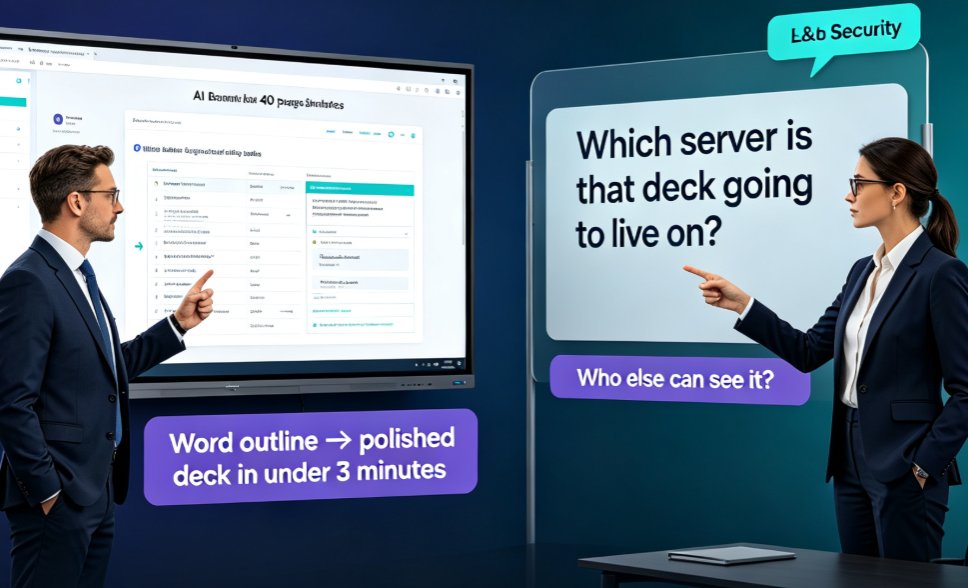
Picture this: you're an L&D manager at a regional bank. Your training team just discovered an AI tool that turns a Word outline into a polished 40-slide deck in under three minutes. Then the compliance officer leans over your shoulder and asks the question that kills every demo: "Which server is that deck going to live on, and who else can see it?"
If that moment feels familiar, you're not alone. The shift to AI-generated slides has collided head-on with audit culture in finance, healthcare, and government. And here's the uncomfortable part: most AI presentation tools were designed for speed, not for the security review table. This article is about closing that gap—and about why Zendeck was built to sit comfortably in front of a compliance officer without flinching.
Let's be real for a second. Security isn't a feature on a spec sheet; it's a conversation you have with people whose job is to say no. If you want that conversation to end well, you need to know exactly what auditors check, what data the tool touches, and where that data sleeps at night.
01 The compliance knot: why regulated teams hesitate
Every regulated industry has the same relationship with new software: enthusiasm at the demo, anxiety at the legal review. And it's justified. A single slide containing client names, diagnosis codes, or deal terms that leaks into the wrong hands is not a tech problem—it's a regulatory event.
Here's what that anxiety looks like in practice:
- A hospital network wants AI-generated patient-education decks, but HIPAA rules require strict control over protected health information (PHI), a signed Business Associate Agreement, and audit trails on who accessed what.
- A wealth-management firm wants pitch decks automated, but FINRA and SEC supervision rules demand that every piece of marketing content be archived and attributable to an approved author.
- A university wants AI courseware for its nursing program, but student records fall under FERPA, and the IT department has a standing policy against sending student data to unvetted cloud apps.
The outcome is always the same: a promising AI tool gets blocked, not because it's bad, but because nobody can prove it's safe. That's the pain point. The solution is a tool that treats security as a first-class citizen—and a vendor that can hand you the documents your audit team actually wants to see.
02 What "enterprise-grade" actually means: the frameworks auditors check
Before you compare tools, you need a shared language with your compliance team. These are the frameworks that show up in almost every regulated-industry evaluation, and the capabilities that sit behind each one.
| Framework | Applies to | What auditors expect | What to look for in an AI presentation tool |
|---|---|---|---|
| SOC 2 Type II | SaaS vendors broadly | Controls over security, availability, processing integrity, and confidentiality | A current, independent audit report; documented access controls and encryption practices |
| ISO 27001 | Global, especially EMEA | A certified information security management system | Certificate plus evidence of risk assessments and vendor management processes |
| ISO 27701 | Privacy-focused orgs | Privacy information management on top of ISO 27001 | Data-minimization policies, consent workflows, privacy impact assessments |
| HIPAA + BAA | US healthcare | PHI protection, signed Business Associate Agreement | Encryption, role-based access, audit logging, and a path to a BAA |
| GDPR | EU / any org serving EU users | Lawful processing, data subject rights, residency controls | EU data-residency options, deletion and export APIs, documented legal bases |
| FedRAMP | US federal agencies | Cloud security authorization for government use | Authorization status or a clear roadmap; government-grade logging |
The pattern is clear: every framework is really asking three questions—who can see your content, where does it live, and can you prove both answers? If a tool can't answer those three questions in writing, no certification list will save it.
One thing worth flagging here: SOC 2 Type II and ISO 27001 reports should be requested under an NDA directly from the vendor. Any established tool will share them. If a sales rep dodges the request, treat that as a strong signal and move on.
03 The real cost of a slip
Let's talk about why compliance reviews deserve your patience. Data breaches carry price tags that make CFOs flinch. Industry research consistently places healthcare and finance at the top of the cost curve, driven by regulatory fines, forensic investigation, notification requirements, and lost customer trust.
Even a conservative reading of industry data says the same thing: the costliest breaches land in the most regulated sectors. That's why a compliance review is not bureaucracy for its own sake. It's the cheapest insurance your organization can buy.
Does that mean regulated teams should skip AI presentation tools entirely? Not at all. It means they should choose tools that keep sensitive content inside controlled boundaries. That's precisely where the conversation about private deployment begins.
04 The security dials that actually matter
Forget the marketing pages for a moment. When your security team kicks the tires on an AI presentation tool, these are the controls they'll actually poke at:
Encryption at rest and in transit. Slide content should be encrypted both while moving across the network and while stored on the server. For maximum control, look for bring-your-own-key (BYOK) options that let your organization manage the keys—this is what the more advanced enterprise products in the market now offer.
Role-based access and visibility controls. Not everyone in a hospital or bank should see every deck. Look for granular permissions so a nurse educator can edit the patient-education template while only the training director can touch the compliance review deck.
Audit logs with real retention. The question is never "did someone open the file?" but "who opened it, when, and from where?" Audit logs that retain viewer and editor history for a defined period give your compliance team the paper trail they need for internal reviews.
Data masking and sensitive-content redaction. Some tools automatically flag or hide personally identifiable information—things like account numbers or patient IDs that accidentally land in a text box. This is still rare in presentation tools and worth asking about directly.
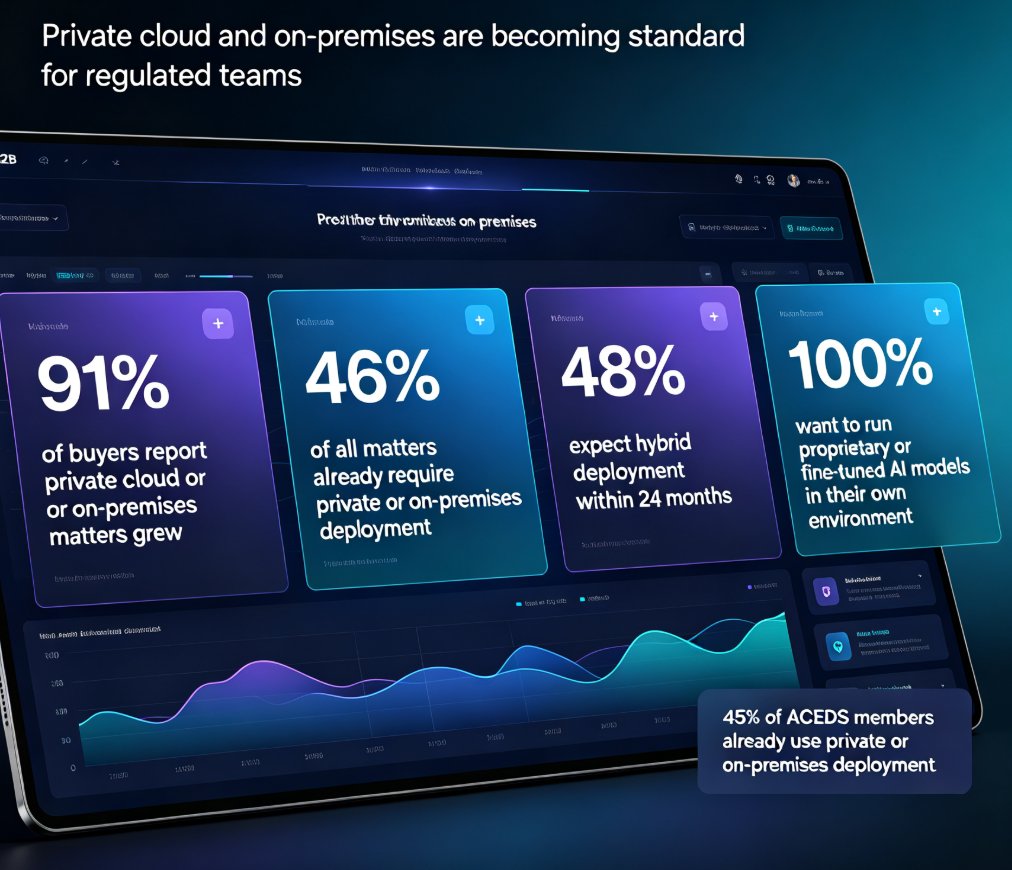
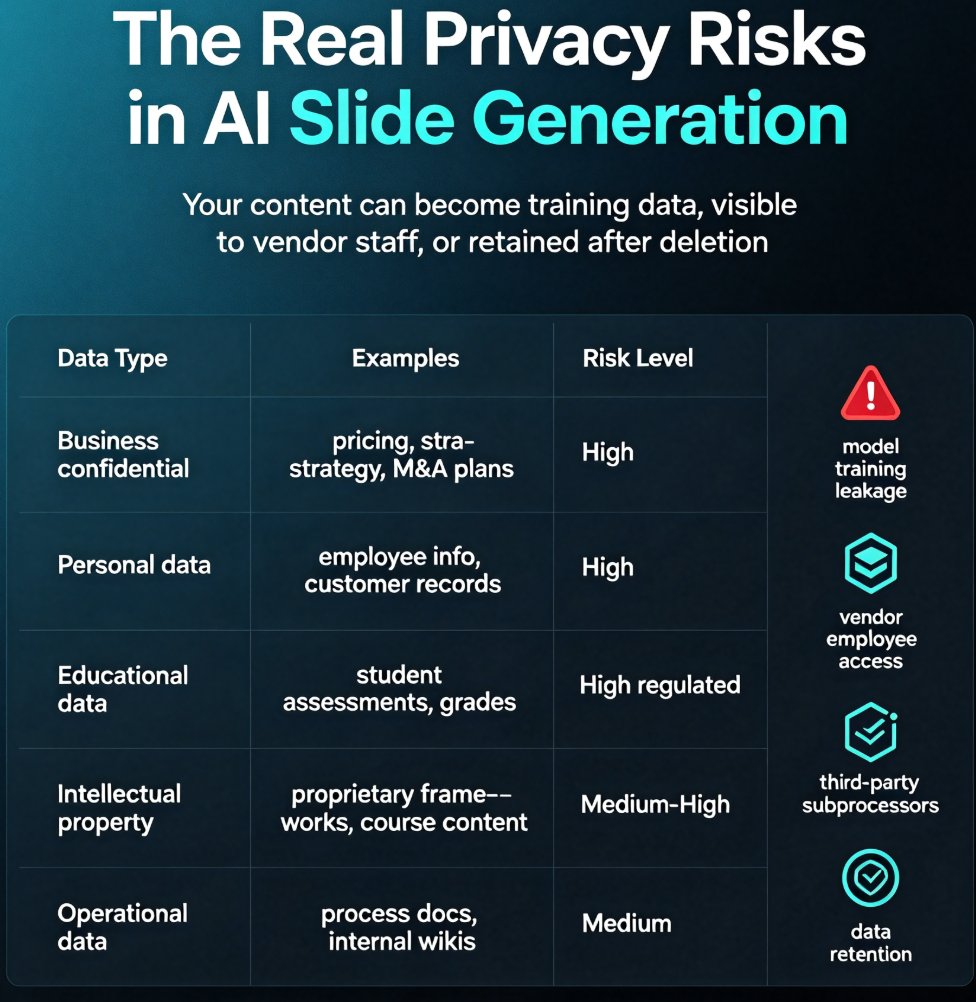
Private deployment and data residency. For the most demanding environments, the ability to run the AI engine inside your own cloud tenant is the difference between approval and rejection. This trend is accelerating across the industry—and it directly addresses the data-security concerns that our deeper coverage explores in the 2026 data security trends in AI presentation tools guide.
One honest piece of advice from someone who's sat through too many vendor security reviews: don't let the sales team talk you past the data-processing agreement. The product might be brilliant, but if the contract doesn't let you opt out of model training or export your own content, the demo was wasted time. Get the deletion and export policy in writing before you pilot.
05 Where Zendeck fits: enterprise controls without a design team
Now here's the interesting part for regulated teams. Zendeck was built to remove the design bottleneck—upload an outline, get a structured, on-brand deck in minutes. But it was also built with a second audience in mind: the compliance officer who has to sign off on the tool.
Zendeck pairs the convenience of AI-generated slides with the control layers that regulated industries demand: strong encryption, managed access, and the option to keep content inside your own infrastructure.
Let's be concrete about what this means in a working week:
- A healthcare training team creates patient-education decks from a Word outline. The deck never leaves the enterprise environment, access is restricted to trained staff, and the content is governed by the same data policies as every other internal document. For the bigger picture on protecting student and patient data in AI courseware, our data privacy in AI courseware 2026 article walks through the specific obligations.
- A finance firm generates investor-update decks, then routes them through the same review-and-approval workflow it already uses for any client-facing material. The deck is just another governed document—one that happens to look like it came from a design studio.
That last point is the one most people miss. Compliance isn't only about where data sits; it's about whether the tool fits into your existing governance workflow. If your team already has a document lifecycle with review stages, export controls, and retention rules, the right AI presentation tool should slide into that process, not around it.
If you're wondering how far the security trend goes, the shift toward private deployment for AI presentation tools is one of the clearest signals of the year. And if you're evaluating Zendeck specifically, you can explore how the platform approaches governance in our AI-governed brand consistency guide.
06 A 5-point checklist before you commit
Whether you go with Zendeck or any other tool, run this five-point check with your security team before rollout. It will save you weeks of back-and-forth later.
- Data residency. Where is my content stored? Can I choose a regional data center if my regulator requires it?
- Encryption and key management. Is data encrypted at rest and in transit? Can my organization hold the keys (BYOK) if needed?
- Access and audit trails. Who can view and edit decks? Is there a logged record of every access I can export for an audit?
- AI training policy. Is my content used to train models? Is there an explicit opt-out, and is it in the contract rather than a sales email?
- Export and deletion. Can I take my decks and their assets out at any time? What happens to my data when the contract ends?
A tool that answers all five questions in writing is a tool you can defend in front of an auditor. A tool that hesitates on any of them is a future incident memo.
07 The bottom line
AI presentation tools are no longer just about speed—they're about trust. For regulated industries, the winning tool isn't the flashiest generator; it's the one that makes both the presenter and the compliance officer comfortable. Zendeck sits in that sweet spot: AI-driven slide generation with the kind of enterprise controls that let finance, healthcare, and education teams move fast without breaking their governance rules.
So before you schedule that next demo, pull up the security review checklist. Ask the hard questions. And if a vendor can't answer them, thank them for their time and keep looking. Your next all-hands deck doesn't need to keep you up at night.
FAQ
Which compliance certifications should I ask an AI presentation tool about?
Start with SOC 2 Type II and ISO 27001 reports—these are the baseline for any enterprise SaaS. If you handle health data, you also need to confirm HIPAA readiness and a Business Associate Agreement path. For European or global operations, check ISO 27701 and GDPR alignment, including data residency. Ask to review the latest reports under an NDA; a tool that hesitates here is the first red flag.
Can Zendeck be used for sensitive or confidential slide content?
Yes. Zendeck is built for teams where brand and data confidentiality matter. It supports enterprise-grade controls such as encryption in transit and at rest, role-based access, and clean export and deletion policies. For the most sensitive workloads, the private deployment option keeps slide content inside your own infrastructure instead of a shared multitenant cloud—which is exactly what compliance officers want to hear before approving a pilot.
Does Zendeck use my uploaded content to train its AI models?
The right question to ask any AI presentation vendor is whether your data is used for model training and whether you can opt out. Zendeck's enterprise posture treats your outlines, slides, and notes as your data, and private deployment gives you additional governance control. Before signing anything, request the data processing agreement and confirm the opt-out terms in writing so your legal team has documentation.
What is private deployment and when does it matter for AI presentation tools?
Private deployment means the AI engine and your content run inside an environment your organization controls—on your cloud tenant or your own servers—rather than a shared public platform. It matters for regulated sectors like banking, insurance, and healthcare where data residency, audit requirements, or internal security policies forbid sending content to third-party services. For these teams, private deployment is often the difference between "approved" and "not a chance."
How do I evaluate an AI presentation tool from a security standpoint before rolling it out?
Run a five-point check: (1) confirm encryption at rest and in transit with details on key management—look for BYOK if your security team demands it; (2) verify audit logs cover who viewed, edited, and exported each deck; (3) ask about data residency and whether EU or regional storage is available; (4) confirm role-based access so only approved teammates can open sensitive decks; and (5) get the deletion and export policy in writing so you can prove you own your data. Then pilot with a small, non-sensitive project before scaling.